
Battery Storage
Fox ESS Battery Storage for UK Homes
Fox ESS makes modular home battery systems: wall- or floor-mounted EP-series batteries and stackable EQ floor towers, paired with the company's own hybrid inverters and monitored through the FoxCloud app. The practical appeal is the modularity — start with the capacity you need today and add units later, rather than paying for a maximum-size system on day one. This page explains Fox ESS for UK homes using Fox ESS's own published figures. The battery system in HCE's own job photos is EnSmart, fitted as part of our battery storage work; if Fox ESS is the system you want, ask us and we will confirm in writing how it would be supplied, who installs and commissions it, and what warranty attaches.
Quick answer
Fox ESS battery storage for UK homes:
- Modular LiFePO4 home batteries paired with Fox ESS’s own hybrid inverters — suited to homes that want to start small and add capacity later
- Cost anchor: the Energy Saving Trust puts home batteries at £1,500 to £10,000, around £4,600 for 5 kWh — an actual installed price comes from surveying your home
- EP5 units hold 5.18 kWh (a Fox-quoted 20.8 kWh maximum across four); EP11 units hold 10.36 kWh, scalable to a published 41.6 kWh. Both IP65-rated
- Fox ESS battery warranty (V4.5, September 2025): 10 years on EP-series, 12 on EQ towers; at least 70% of nominal energy retained, or a throughput cap, whichever comes first
- 0% VAT applies to an installed home battery until 31 March 2027, then 5% from 1 April 2027 (HMRC VAT Notice 708/6)
- Not whole-home backup: EPS covers essential circuits at the inverter’s 3–6 kW rating, switching over in under 10 milliseconds. If whole-home backup comes first, compare Tesla Powerwall 3
Figures: Fox ESS datasheets and UK battery warranty policy V4.5; Energy Saving Trust; HMRC VAT Notice 708/6.
Who are Fox ESS?
Fox ESS is an energy storage and inverter manufacturer founded in 2019 — a Sino-British partnership backed by Tsingshan Group, a Global Fortune 500 company. It is a genuinely established name in the UK rather than an import with a webshop: FOXESS UK LTD has been registered here since 2020, runs a national service centre in Coventry covering technical support, training and aftersales with enquiries answered by UK-based technicians, and distributes through seven official UK partners. Fox ESS reports that S&P Global Energy's Residential Energy Storage Market Tracker ranked it the UK's No. 1 residential energy storage provider for 2025 by shipments. Every figure on this page comes from Fox ESS's published datasheets and its current UK warranty policies.
 Manufacturer image
 The Fox ESS system explained
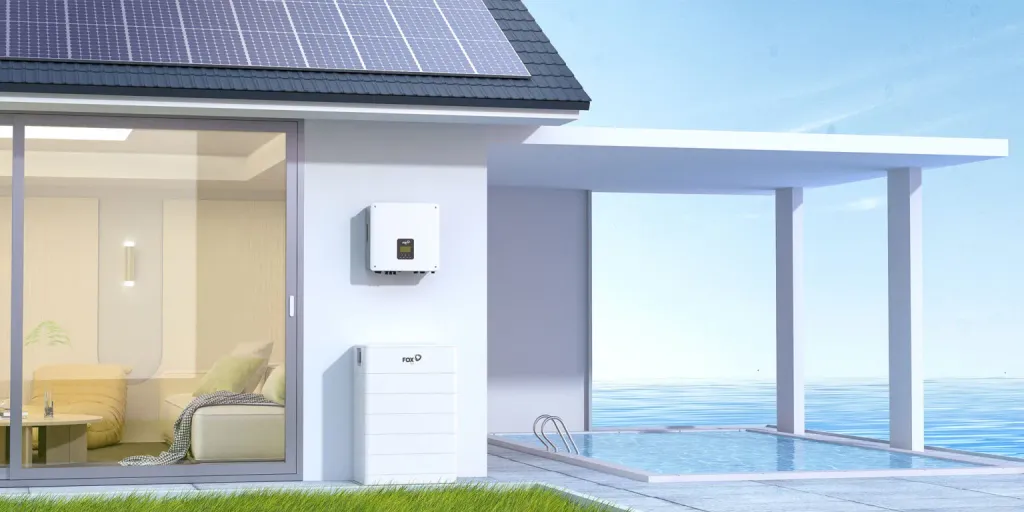
A Fox ESS system pairs a hybrid inverter with LiFePO4 (lithium iron phosphate) batteries — either slim wall-mounted units running in parallel, or a floor-standing stack. All of the current residential batteries are IP65-rated, so they can live indoors or outdoors.
The published building blocks:
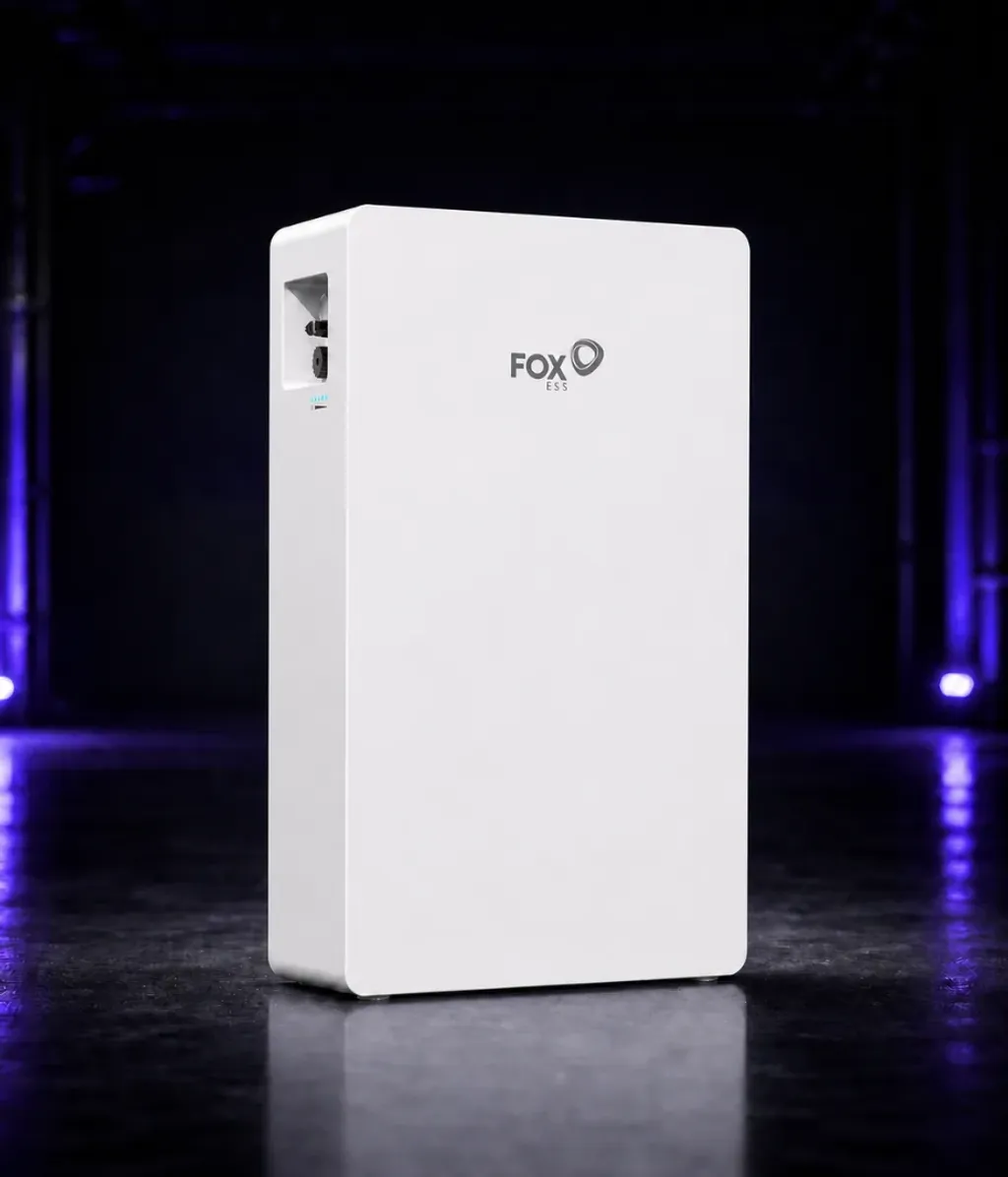
- EP5 battery — 5.18 kWh per unit, wall- or floor-mounted, with up to four running in parallel for a Fox-quoted maximum of 20.8 kWh. A heater variant (the EP5-H) extends cold-weather operation down to −25°C, which matters for garage and outdoor installs. Round-trip efficiency is published at ≥95%.
- EP11 battery — the 10.36 kWh flagship, scalable to a published 41.6 kWh across four units. The newer EP6 and EP12 siblings add built-in battery warming at 5.76 kWh and 11.52 kWh per unit respectively.
- EQ4800 tower — a plug-and-play floor stack that grows in 4.66 kWh modules from 9.32 kWh to 41.93 kWh, for homes that prefer one footprint to wall boxes.
- H1-G2 hybrid inverters — five single-phase sizes from 3.0 kW to 6.0 kW, with two solar MPP trackers, UK G98/G99 grid certification and a published maximum efficiency of 97.08%. Larger homes step up to the KH series at 7–10.5 kW. With a battery fitted, the inverter provides EPS backup for essential circuits with a switchover under 10 milliseconds.
- FoxCloud monitoring — system monitoring and control from a smartphone app or web portal, over the built-in WiFi.
Because both battery families are modular, capacity is something you grow into: a single EP5 for a small evening load, or a stack that covers a heat-pump-and-EV household — the inverter should be sized for the plan, not just the first purchase.
 Manufacturer image
 Who Fox ESS suits
Fox ESS is the start-small, scale-later choice of the lines compared here. If a full-size battery is more than your budget or your usage justifies today, a single 5.18 kWh EP5 gets you storing, and the same system can grow to 20.8 kWh — or, on the EP11 platform, to a published 41.6 kWh — without starting again. The UK support story is also unusually strong for the price bracket: a national service centre in Coventry with UK-based technicians, rather than support routed abroad.
Be clear-eyed about backup: the EPS output covers essential circuits at the inverter's 3–6 kW rating, not the whole house — if whole-home backup is your first priority, compare the Tesla Powerwall 3 before deciding. And as with any of the systems compared here, if a simpler single-battery system is the more sensible spend for your home, we will tell you so.
Warranty, as Fox ESS publishes it
Fox ESS's current UK & Ireland warranty policies set the terms out plainly — worth reading before you buy anything:
- 10-year product warranty on EP-series batteries (EP5, EP6, EP11, EP12) from the date of installation, and 12 years on EQ towers, under the battery policy issued September 2025.
- Performance warranty: the battery is warranted to retain at least 70% of its nominal energy for the warranty period, or to a minimum energy throughput — 38.85 MWh on the EP11 — whichever comes first. Fox's terms are throughput-based, not cycle-based, which is why we don't quote cycle counts.
- 10-year inverter warranty, with a condition: the system must be connected to Fox Cloud within 120 days of installation and kept connected — otherwise the term reduces to 5 years. Whoever installs and commissions the system should make that connection before leaving, and it is worth confirming in writing that they will.
Every home battery warranty is bounded — if a brochure implies a battery is guaranteed for good, that is the brochure talking, not the warranty document. These are the real terms, and we can walk you through them before you decide.
How a Fox ESS installation should work
- Step 1
Initial consultation
A no-obligation conversation about your usage, your goals and whether Fox ESS is genuinely the right fit — if another system suits you better, a good installer says so.
- Step 2
Your design and survey
The installer surveys the property, checks your consumer unit and DNO connection, and designs the system: battery capacity now, headroom for later, and the right inverter size.
- Step 3
Final installation
The installer commissions the system and connects it to Fox Cloud — the inverter’s 10-year term depends on that connection being made within 120 days of installation — then sets up the app with you and hands over the warranty documents.
HCE is MCS-certified, NAPIT-registered and a member of the HIES Consumer Code.
What the warranty promises, and who is allowed to claim it
Fox ESS publishes a UK and Ireland battery warranty policy separately from its European one, and the UK terms are the better of the two — worth knowing, because pages written for a European audience understate them. Under version 4.5, dated 11 September 2025:
- EP and CQ packs: 120 months from installation (and no more than 125 months from manufacture).
- EQ and EVO ranges: 144 months — twelve years — on the same basis.
- Performance: at least 70% of nominal energy retained over that term, or a per-model energy throughput, whichever comes first.
That second clause deserves arithmetic rather than a shrug, because it is where a hard-working battery meets its limit. Take an EP12: the policy caps it at 43.19 MWh of throughput. At one full cycle a day the term runs its distance comfortably. Cycle it twice a day — the pattern you get arbitraging a cheap overnight tariff as well as storing solar — and the same cap arrives in roughly five years rather than ten. Nothing improper is happening; the warranty is counting energy, not time. It simply means the honest answer to "how long is it covered for" depends on how hard you intend to work it, and that belongs in the conversation before you buy.
Two conditions people rarely see until they need them. The policy states that the only people eligible to claim are the installer and Fox ESS authorised personnel — a homeowner cannot go direct — and if the installing company has gone into administration, appointing a replacement to handle the claim falls to the end user, at their own expense. And the cover can be voided by installation by a non-accredited installer, inadequate ventilation, or less than 300 mm of clearance around the pack. That clearance is a warranty condition, not a tidy-installation preference, which is why the position should be settled at survey rather than on the day.
How to check Fox ESS for yourself
The grid register. The Energy Networks Association publishes a type-test register of inverters and storage devices, and it records compliance per model and firmware version rather than per manufacturer. Fox ESS appears on it extensively — a register snapshot covering entries to April 2024 listed 210 FOXESS devices, of which 208 were shown compliant and two as needing further information — and current entries are still being published, the most recent we checked dated 24 September 2026. It is the register your network operator's paperwork leans on, so the installer should check the entry for the exact model and firmware going on your wall before the connection application goes in.
MCS, and a claim to be careful with. You will see "MCS-approved" attached to battery brands, including this one, on installer and comparison sites. It cannot be checked, because the MCS Product Directory has no battery or inverter category at all — its technology filters cover solar PV modules, mounting, heat pumps, biomass, wind and solar heating. Searching it for Fox ESS returns nothing, and so does searching it for Tesla, Sigenergy or any other storage brand, while PV module manufacturers return hits immediately. What MCS certifies for storage is the installation and the installer, under MIS 3012 — which is the thing that actually protects your export tariff, and the thing you should ask any installer, us included, to evidence.
One more practical line before a quote: a system whose inverters total no more than 16 A per phase — 3.68 kW on a single-phase supply — is notified to the network operator after commissioning under G98, while anything larger needs a G99 application approved first. The solar battery storage hub explains the routes, the solar battery storage cost page shows what each adds to a quote, and if you are weighing this range against the obvious alternative, our Tesla Powerwall 3 page sets out that system's own warranty condition.
By region
By region
Region by region: the housing, the network operators and the sunshine figures that shape how this system would fit.
Surrey
Sussex
Hampshire
Berkshire
South West London
North London
Hertfordshire
Essex
Bedfordshire
Buckinghamshire
Fox ESS FAQs
Who are Fox ESS?
Fox ESS is an energy storage manufacturer founded in 2019 — a Sino-British partnership backed by Tsingshan Group, a Global Fortune 500 company. In the UK it has operated as FOXESS UK LTD since 2020, with a national service centre in Coventry where enquiries are answered by UK-based technicians. Fox ESS reports that S&P Global Energy’s market tracker ranked it the UK’s No. 1 residential energy storage provider for 2025 by shipments.
What sizes do Fox ESS batteries come in?
The range is modular. The wall- or floor-mounted EP5 is a 5.18 kWh unit that runs up to four in parallel — Fox quotes a 20.8 kWh maximum — while the larger EP11 is 10.36 kWh per unit, scalable to a published 41.6 kWh across four. There is also the EQ4800 floor-standing tower, which stacks 4.66 kWh modules from 9.32 kWh up to 41.93 kWh. In practice, you can start with what you need now and add capacity later, subject to your inverter and the space available.
Will a Fox ESS system keep the power on in a power cut?
Partially — and it is worth being straight about this. With a battery fitted, the H1-G2 hybrid inverter provides EPS backup that switches over in under 10 milliseconds, but its output is limited to the inverter’s rating of 3–6 kW (up to 10.5 kW on the larger KH series). That covers essential circuits — lighting, the fridge, the router, sockets you nominate — rather than whole-home backup. If whole-home backup is the priority, we would talk you through the alternatives before you decide.
What warranty do Fox ESS products carry?
Under Fox ESS’s current UK and Ireland battery warranty policy (V4.5, September 2025), EP-series batteries carry a 10-year product warranty from installation and EQ towers 12 years, alongside a performance warranty of at least 70% of nominal energy over that period or a minimum energy throughput — 38.85 MWh on the EP11 — whichever comes first. The inverter is a separate promise with its own condition, which catches people out: under Fox ESS’s current inverter warranty policy (V2.3, October 2025) it carries 10 years only if the system is connected to Fox Cloud within 120 days of installation and kept connected — otherwise the term reduces to 5 years. So “Fox ESS gives a 10-year warranty” is true of the battery outright, and of the inverter only with that connection in place.
Want to know whether a Fox ESS system suits your home — and how it would be supplied, installed and warranted, in writing?
Request your free quote or call 0204 547 1892. You can also compare it with the Sigenergy SigenStor, Tesla Powerwall 3 and EcoFlow PowerOcean, or start with our guide to choosing a home battery. For commuter homes that sit empty until evening — where stored daytime generation earns its keep — see our Surrey installations page.