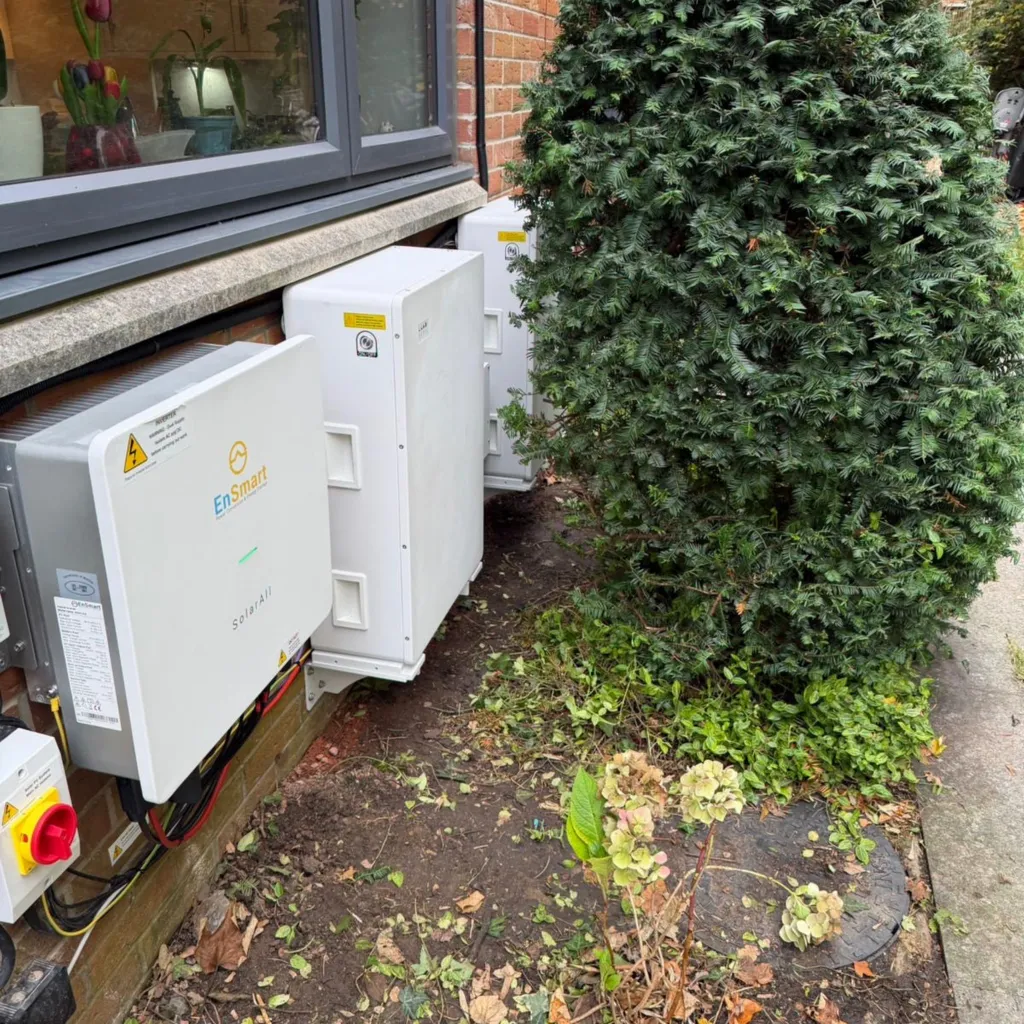
The honest national anchor is the Energy Saving Trust's. Its battery storage advice,
updated 19 August 2026, puts home storage at £1,500 to £10,000, with a
5 kWh system costing around £4,600 and a typical
home system at 10 kWh. Installed residential systems carry
0% VAT until 31 March 2027, reverting to 5% from 1 April 2027 — and since
1 February 2024 that zero rate covers a battery fitted on its own, not just one fitted
alongside new panels.
Five things move a quote away from that national figure, and a good quote shows all five:
- Usable capacity — the kWh you can actually cycle, which is not always the headline number on the box.
- Whether an inverter is part of the job — a hybrid replacement costs more than an AC-coupled battery bolted alongside a healthy existing inverter.
- Backup — keeping circuits live through a power cut needs extra hardware and extra wiring, and it is the single most common reason two quotes differ.
- Where it goes — cable runs, a garage versus a first-floor cupboard, and whether the wall can carry the weight.
- The grid route — a system inside the G98 limit is notified after commissioning; a larger one needs a G99 application approved first, which is time, not just paperwork.
The Energy Saving Trust also makes the point we would rather you heard early: fitting storage
at the same time as panels is cheaper than a second visit later, because the team is already
on site. Our own number comes from a survey of your roof, your bills and your tariff — the
figures above are the benchmark you should hold that number against. There is a fuller
breakdown on our solar battery storage cost page, the two
halves added up — panels and battery as one job — on solar
panels and battery cost, and Tesla's own published figures set against its warranty on
Tesla Powerwall 3 cost.
Will it pay for itself?
A battery earns its keep on the gap between two rates: what you pay to import a unit of
electricity in the evening, and what you are paid to export the same unit at midday. Every
stored unit you use yourself is bought at the export rate and spent at the import rate, and
the wider that gap, the faster a battery pays. Export rates under the Smart Export Guarantee
are set by each supplier and must be above zero (Ofgem's rule), they change
on short notice, and that is why this page never prints one.
Two honest caveats, both the Energy Saving Trust's. Savings "can be significant, but won't
always be enough on their own to justify the cost of the battery". And a battery running a
heat pump or a time-of-use tariff will usually save more than one whose only job is holding
surplus solar. If your evenings are quiet and your tariff is flat, a smaller battery — or no
battery — may be the better answer, and we would rather say so at the survey than after a
deposit.